The Librarian
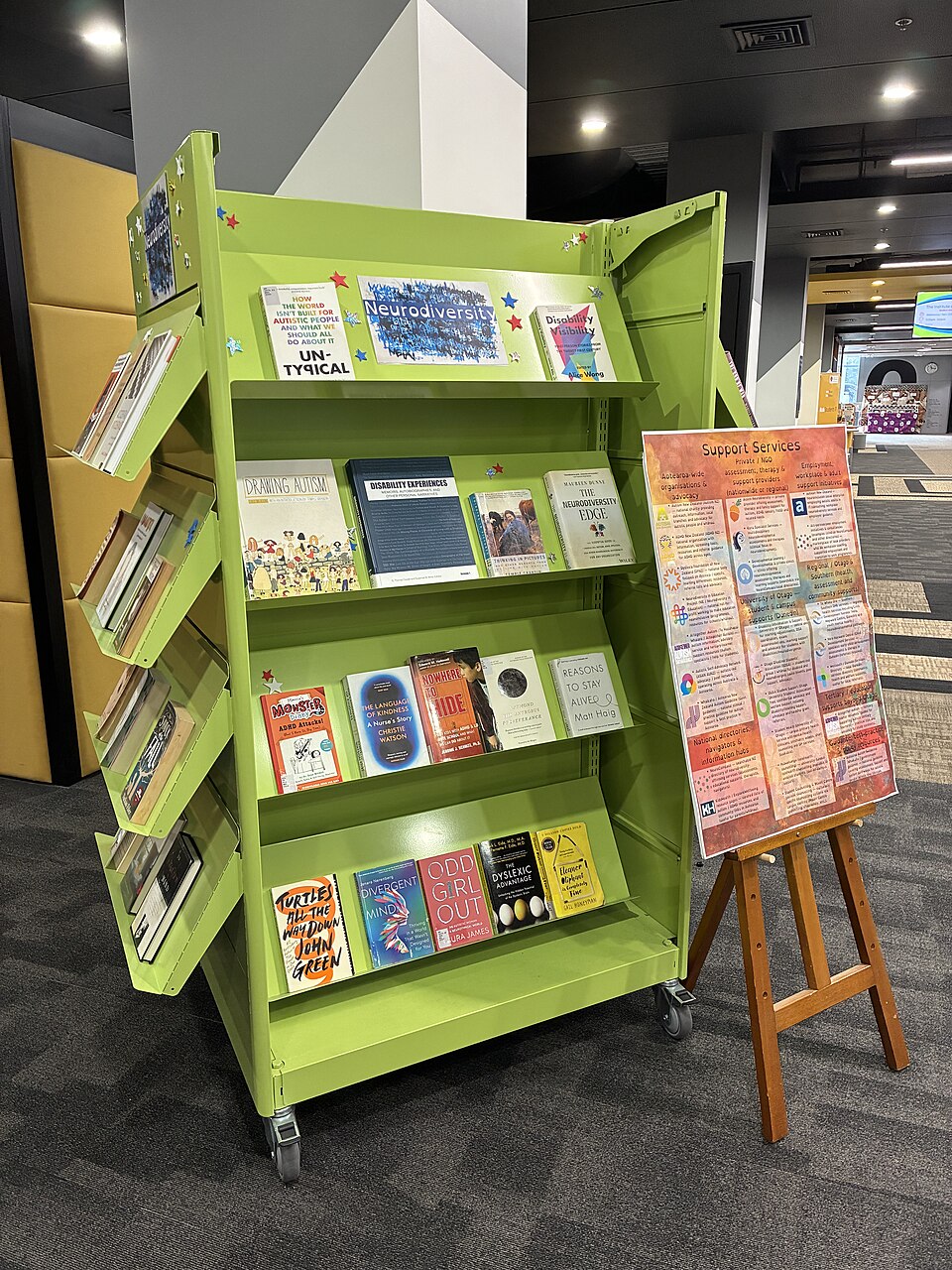
"Book display highlighting neurodiverse authors and books about neurodiversity, at University of Otago Central Library" by DrThneed, licensed under CC BY 4.0.

A real benefit to this break has been the ability to have a broad range of conversations about work, value, risk, and goals. From open ended musings on what the next 20 years might look like, to tactical dives into what really constitutes value creation in the agentic workplace.
I've read plenty of good explorations into how people see roles evolving. Into the need for contracts, judgement and the salvation that is the perfect harness. I've hashed and re-hashed variations on the need to restructure work and the flows to align with the strengths and weaknesses of new models and the optimization of context via Markdown.
Ultimately I keep running into barriers when it comes to quantifiable value creation. There is definitely some opportunity to reduce operational costs, but on the creation side every conversation I have ends with the same quandary.
Speed Without Traction
It's true you can deliver high quality user experiences, creating what on paper would be a highly optimized journey in weeks, or even days. It's also true that the migration of legacy platforms could go from won't do because it's an 18-month, 30-engineer effort to should do with 2 months and 5 engineers.
But neither of those amazing feats guarantees new value creation. We can build things faster than end users can reasonably be expected to adopt them, and modernizing something isn't the same as understanding a user's current needs and delivering against those requirements.
Rightly there's a lot of focus on how the Product Owner/Manager role needs to evolve. The idea that deciding what to build is really the most critical stage. I think this is true, but a conversation yesterday got me thinking that maybe we need something beyond just a supercharged PM.
What If We Started Over?
The question was, "What if we threw everything aside, no JIRA, no GitHub, no Confluence, no CRM tools, nothing... how would we design a PLM/PDLC/SDLC?" The premise being that one way to create real value was to think specifically about the challenges many enterprises face with internal applications. A team builds it based on current business requirement. A year later another team takes it over, and 3 years down the road there's an orphan that can't be deprecated but has no embedded context for why it even exists, let alone why it's built the way it is.
This is the wall one of my hopes for value creation smashed right into. A challenge larger orgs often face is the artificial grouping of business units to reduce the use of near-sibling tools. I'd wanted to see a proliferation of targeted experiences that addressed specific user needs, but it's still expensive to maintain five inventory management tools even if the cost to build is low.
Enter the Librarian
This thought cyclone led me to Library Science. Over the last 20 months I've seen technical teams obsess about co-locating as much data as possible for their projects. JIRAs become stubs that point to specs in GitHub. Confluence becomes an index of GitHub markdowns. There's a push to keep the context as close to the code as possible, and this is great.
But we all know just how quickly software documentation drifts, losing value hours after it's been minted. The same is true for all of this new context. If we just take all of the artifacts that are created and shove them into a vector database we're going to dilute any potential value.
That drift problem only grows worse if you have the ability to capture and store support emails, Slack messages, or calls in context. Pour on some quarterly review data, add a heavy dose of proposed yearly plans that never make it beyond the great wall of funding approval. You'll have a nice 7-layer cake of misdirection.
A New Responsibility: Curation
I'm not sure where this role lands, but I'm betting there is a new core responsibility for curation. It's like the judgement-discernment for what to build, but broader; focused on the what to keep and what's the story that needs to be told both to leadership and to the context to build and maintain these systems.
This role will need to decide when to pull some titles from their current section, because they no longer fit. They'll need to curate displays guiding context in the direction they want to steer.
Deliberate Over Fast
This capability can certainly benefit from intelligence tooling, but I suspect there needs to be a human recalibration—a deeper rethink of how to optimize for operationally efficient delivery and support through sifting data for the fossils that inform and the nuggets that can become the next critical component.
The takeaway for me is that there needs to be a deliberate culture of study. We've gone hog-wild with "burn tokens and do everything," but I don't think we've spent nearly enough time re-envisioning the future with an eye towards understanding the impacts to the various cost curves. Fundamentally I think there is a limit to the amount of "new" that humans can consume; that in turn limits the ability to generate value from novelty. I feel we need to focus on strategies like reducing Total Cost of Ownership through intentional curation. We need to emphasize the value in communication, not the speed with which we can create a monthly business report. These are skills we'll need to assess and enhance as we try to find every hidden coin on every level of this Application Lifecycle Management scroller.