Superish-IC
I don't have a ton to add to the current spurge of Super-IC content. I have always been a bit dubious of the long term value of the 10x engineer. That type of mindset is critical in the world of the startup, but I have thoughts-and-feelings about how it plays in larger enterprises.
Instead I'm curious to know what actually makes most of us better. We all have days or hours where we are in a flow state - fully in go mode. Moments where we deliver more measurable value; more fully grasp the problem we are trying to address; where the churn is low and the output is high.
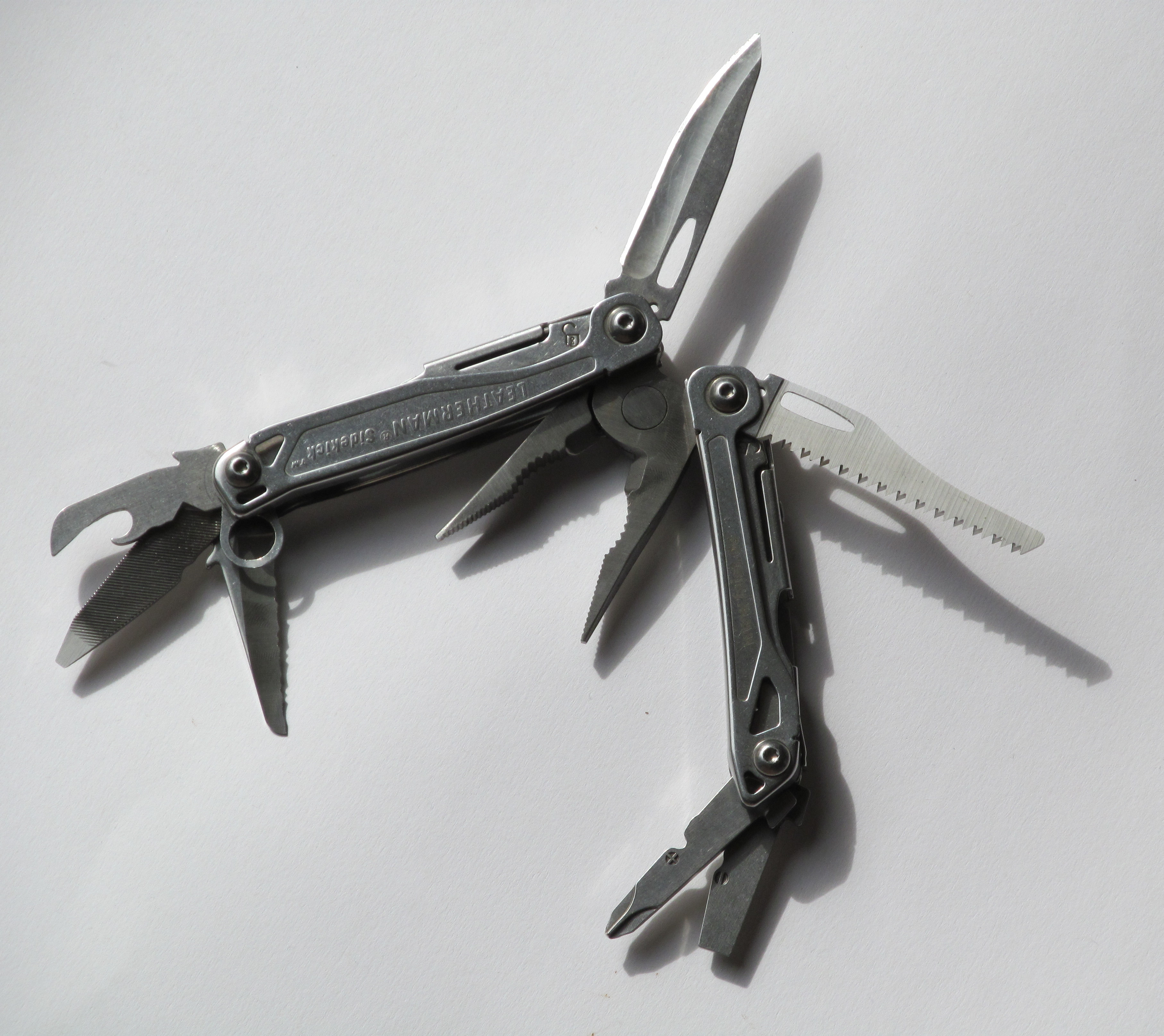
Source: Wikipedia - Leatherman (image: Leatherman sidekick-ausgeklappt.jpg)

For me there are a few common factors that consistently put me in Superish-IC (or leader) mode:
- Proximity to the problem - most often this has been when I am in the room with the customer or consumer of what I am building
- Clear Mind - I'm not trying to solve 50 things at the same time, I have the space to fully devote myself to the task at hand
- Joy of Doing - I need to find some aspect of what I'm working on that brings me joy - it could be what I'm making, or the domain, or even the people & conversation
- Trust - I need to have already put in the work to build credibility with my co-conspirators; we want the same outcomes and we know it
- Measurable or Known Outcomes - Not necessarily a fully defined set of features or specs, but some clear markers that I can drive towards as the terrain maps get more detailed
- Competence - I need to have a reasonable level of domain, technical, and/or leadership skill that is relevant to the problem
If these conditions allow me to move faster, what role can intelligence tools play? Yes, agents can create lots of code, but code isn't necessarily what helps a company create value or move fast. Using an approach like BMAD https://docs.bmad-method.org with a team can make it possible to improve 4, 5, and 6, but that's not guaranteed. These are all human factors, not an automatable pipeline.
The shift for me has been to think beyond specs. I treat intelligence tools like a Leatherman multi-tool. It's been more impactful to use it for search or something akin to Brian Eno's Oblique Strategies. The multiplier for me is not the output - it's the collaborative level-up that occurs through dialog. Even if I can't always trust the output from a chatbot, I can use it as a challenge or puzzle to help me find the right direction.
I'm curious how others approach the human-to-human lift in the age of AI. I have the vague fear that there's a little too much emphasis on build and not enough on the bond side of accelerating enterprise productivity.
- Another fun word that I came across while thinking about this is quinsy - a painful, pus-filled pocket that develops near the tonsils. There are definitely areas in the intelligence tools world where I could deploy it as a term of art.